Short Cycling AC: What Makes It Switch On and Off So Fast
October 10, 2026
QUICK ANSWER: An air conditioner short cycles when something forces it to shut off before it finishes a normal cooling run, usually after only a few minutes. The most common causes are restricted airflow from a dirty filter or blocked return, a thermostat reading the wrong temperature, a frozen evaporator coil, low refrigerant, a condenser coil too dirty to shed heat, a failing electrical part, or equipment that is simply too large for the home. A healthy system runs in longer, steady cycles, so the fix starts with measuring airflow, temperature split, and pressures before replacing anything.
It is 4:30 on a July afternoon, the thermostat in the hallway says 79, and the air conditioner has just clicked on for the fourth time in twenty minutes. The outdoor fan spins up, the vents blow cool for a couple of minutes, and then everything drops to silence. Before you can settle into a chair the whole sequence starts again. Nothing looks broken, and yet the house never really cools down.
That pattern is called short cycling, and it is one of the most common complaints in the Central Valley once the afternoons pass 100 degrees. In Oakdale, Riverbank, Modesto, and Turlock, a cooling system can run for months in mild weather without showing a weakness, then expose it the first week of real heat. Understanding what is happening inside the system helps you decide what you can check yourself and what needs a technician with gauges.
What Short Cycling Actually Means
A normal cooling cycle is long and steady. On a hot day the system starts, the blower moves air across a cold evaporator coil, the compressor pumps heat out to the condenser, and the run continues until the thermostat is satisfied. Manufacturers of residential systems generally describe a cycle that ends after only a few minutes, or that repeats roughly every ten minutes or less, as a sign that something is wrong. Industry guidance makes the point that truly extreme short cycling is not possible unless there is a system issue, which is a useful way to think about it. A well matched system on a triple digit day should be running most of the time, not clicking on and off.
The Run Time Test
Pick a hot afternoon and time several cycles. If the system shuts down within three to five minutes and restarts shortly after, that indicates short cycling behavior.
The Difference Between A Cycle And A Trip
A system shutting off after reaching setpoint is normal. A safety device causing shutdown is different. Short cycling usually indicates protection responding to a problem.
Why The Compressor Cares
Every compressor start draws surge current and adds mechanical stress. Repeated starts prevent steady operation, reducing cooling and dehumidification while increasing wear on the compressor.
Restricted Airflow Is the First Place to Look
Airflow problems sit at the top of nearly every manufacturer's list, and they are the cause a homeowner can partly check without tools. An air conditioner depends on a steady volume of air crossing the evaporator coil. When that volume drops, the coil gets too cold, the system loses its ability to move heat, and safety controls start ending cycles early.
Filters
A clogged filter restricts airflow and can cause the system to overheat and shut down. In the Central Valley, dust from orchards, field work, and dry summers can load filters faster than expected.
Closed Registers And Blocked Returns
Closing too many registers increases duct pressure and restricts airflow. Blocked returns from furniture, rugs, or curtains create similar problems. Check every return and register is open before assuming mechanical trouble.
The Evaporator Coil That Freezes
Low airflow can freeze the evaporator coil, causing ice buildup that further restricts airflow. If you find ice on indoor lines, turn the system off, let it thaw, then determine why freezing occurred.
Blower And Duct Issues
Weak blower motors, failing capacitors, dirty blower wheels, or collapsed ducts can restrict airflow despite a clean filter. Technicians can measure static pressure and temperature difference to identify the actual problem accurately.
TIP: Write the date on a new filter with a marker and check it monthly during the cooling season. If you can no longer see light through the media when you hold it up, it has done its job and needs to be swapped, no matter what the package says about its lifespan.
When the Thermostat Is the Problem
Sometimes the air conditioner is fine and the control telling it what to do is confused. A thermostat does one job, which is to sense room temperature and call for cooling until the room matches the setting. If it senses the wrong temperature, or sends a sporadic signal, the system responds with fast on and off behavior.
Location
Equipment makers note that thermostats exposed to unusual heat or cold can misread the room. Sunlit walls, kitchen doorways, or nearby supply registers can trigger early shutdowns while bedrooms remain warm unnecessarily throughout summer months.
Wiring And Sensors
Loose connections, damaged low voltage wiring, or failing sensors can interrupt signals intermittently. Corroded sensors may cause erratic operation, making the problem difficult to identify without proper electrical testing and diagnosis during professional service visits.
Battery And Settings
Weak thermostat batteries can cause strange behavior. Check fan and cycle settings, including minimum run times and cycle rates. Smart thermostat configuration changes after updates can also mimic mechanical equipment problems unexpectedly sometimes during operation.
A Quick Check
Set the thermostat several degrees below room temperature and observe operation. If longer cycles occur with greater demand but short cycles near setpoint, thermostat or equipment sizing deserves closer inspection overall before replacement decisions are made.
Equipment Size and the Humidity Problem
A system that is too large for the space is a quiet cause of short cycling, and it is the one you cannot fix with a filter. An oversized air conditioner pulls the air temperature down so fast that the thermostat is satisfied before the system has run long enough to do its second job, which is removing moisture. Major manufacturers list an oversized system among the causes, noting that an oversized system reaches the set temperature too quickly, which leads to short cycling and poor humidity control.
The Clammy Feeling
If the house reaches the right temperature but still feels sticky, while the system shuts down quickly after starting, oversizing may be responsible. Short cycles reduce dehumidification, leaving indoor air uncomfortable despite reaching the thermostat setting.
Why It Happens
Oversizing often results from replacing equipment based on the old unit instead of calculating today’s actual load. New windows, insulation, sealed ducts, and shade trees can reduce cooling demand, making older equipment unnecessarily large.
How It Is Confirmed
A proper load calculation considers square footage, insulation, window size and orientation, duct leakage, and occupants. If capacity greatly exceeds demand, the solution may involve variable equipment, duct modifications, or replacement rather than repair.
Refrigerant, Coils, and Pressure Safeties
Inside the sealed system, several conditions can trip protective devices and end a cycle early. These are the causes that need a licensed technician with gauges and a clear plan, not a guess.
Low Refrigerant
An air conditioner does not use refrigerant. A low charge means there is a leak. Low pressure can freeze the evaporator coil. Find and repair the leak, then recharge to manufacturer specifications before returning the system to service.
A Dirty Condenser Coil
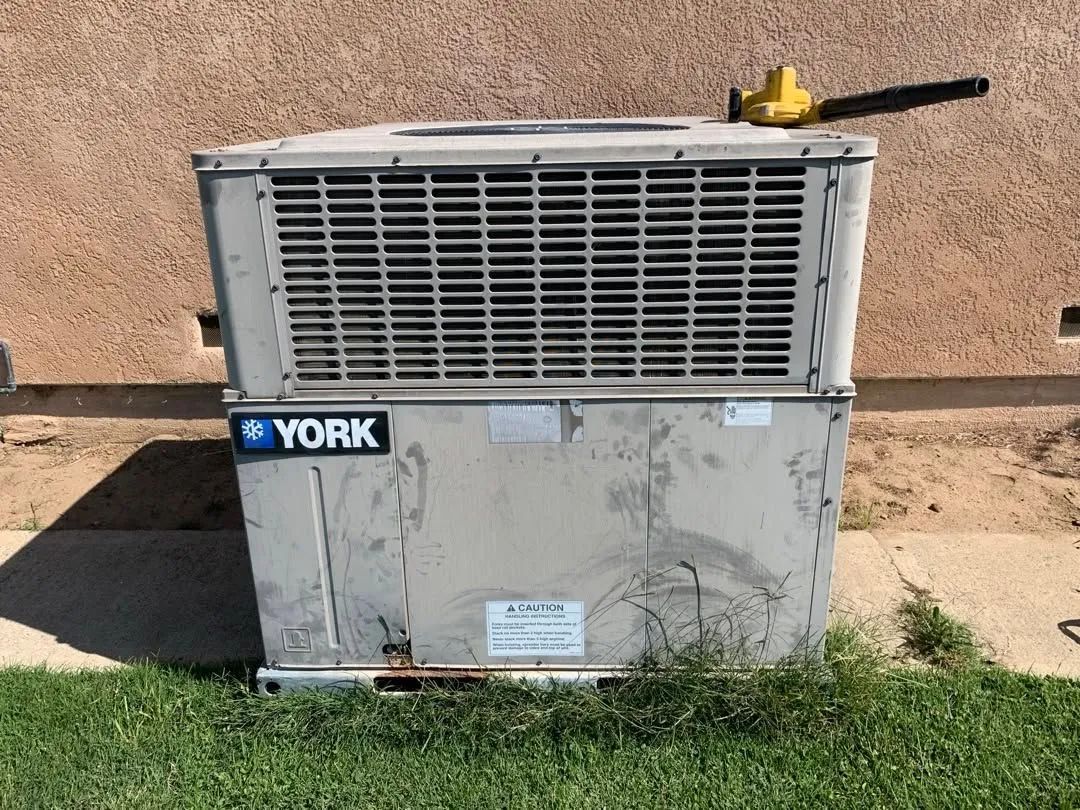
A dirty condenser coil cannot release indoor heat efficiently. Cottonwood, dust, grass, and grime raise pressure until safety controls shut the system down. It then cools and restarts, causing rapid cycling during hot weather conditions.
Condenser Fan Trouble
A weak condenser fan motor or failing capacitor can prevent outdoor heat from escaping. The compressor overheats and shuts down. The outdoor unit may hum while the fan spins slowly or stops completely during operation.
Overheating Compressor
Compressors have thermal protection that shuts them down when temperatures become excessive. Poor airflow, incorrect charge, or electrical problems can cause overheating, making compressor protection cycle repeatedly and signaling serious trouble requiring prompt diagnosis.
WARNING: Do not open the outdoor unit panel, spray the electrical compartment with water, or try to add refrigerant yourself. Live high voltage and pressurized refrigerant are hazards, and a wrong guess can destroy a compressor that a simple repair would have saved.
Electrical Faults That Interrupt a Cycle
Electrical parts wear out, and the Valley heat accelerates the process. A contactor, which is the switch that sends power to the compressor and condenser fan, can pit and stick or chatter. A start or run capacitor can weaken and leave the compressor struggling to start or run, which trips protection. Loose or burned wire connections at the unit can open and close as vibration and heat change them.
What It Sounds Like
Chattering from the outdoor unit, humming without fan movement, or clicking followed by silence can indicate electrical trouble. Tripped breakers and systems that work briefly before stopping are additional warning signs worth investigating promptly.
Why Timing Matters
Electrical problems often begin intermittently before becoming constant. Finding a weak capacitor early may mean a straightforward repair. Allowing the system to continue until the compressor overheats can lead to significantly more serious damage.
Why Testing Beats Replacing
Two air conditioners stopping on a 100 degree day could have a faulty breaker rather than equipment failure. Measuring voltage, amperage, and capacitance identifies the cause faster than replacing parts randomly without testing.
What You Can Safely Check Before You Call
There is a short list of homeowner level checks that sometimes solve the problem. Do them in order, and stop if anything looks unsafe.
Check The Filter And The Returns
Replace a dirty filter, open all registers, and clear blocked returns. Then observe several cycles for changes.
Look At The Outdoor Unit
Check the outdoor coil through the louvers. Clear loose debris and maintain clearance around the unit.
Look For Ice And Water
Frost or ice indicates airflow problems. Shut the system down until completely thawed to prevent damage.
Watch The Thermostat
Check batteries, fan settings, and displayed temperature. Compare readings with another nearby thermometer and observe cycling changes.
Write Down What You Notice
Record run times, noises, starting date, and humidity. Detailed observations help technicians identify patterns and diagnose problems faster.
How a Technician Finds the Real Cause
Short cycling has too many possible causes to fix by habit. The right approach is to measure first. A technician checks static pressure to see whether the ductwork and blower are moving the right volume of air, and the temperature split across the evaporator coil to see whether the system is cooling as designed. Superheat and subcooling readings show whether the charge is right and whether the metering device is working. Electrical testing covers voltage, amperage draw, and capacitor values. Condenser coil condition and fan performance are checked against what the equipment should be doing in the current heat.
Reading The Pattern
A frozen coil with low airflow suggests one cause, while high head pressure suggests another. Short cycles with humidity may indicate sizing or controls instead.
Explaining Before Replacing
A good service visit explains measurements, failures, and available options. Replacement decisions should follow evidence, especially when equipment is oversized, aging, or impractical to repair.
Keeping Short Cycling From Coming Back
Most short cycling is preventable. The causes that show up in August are usually visible in April, which is why a spring tune up matters more in this region than in a mild climate.
Seasonal Maintenance
Clean the condenser coil, inspect the blower and capacitors, test the contactor, check drainage, and verify refrigerant pressures before summer heat exposes developing problems.
Filter Discipline
Check the filter monthly during cooling season. Homes with pets, nearby farm activity, or heavy foot traffic may require more frequent replacement than recommended.
Clear Space Outdoors
Keep the condenser clear of leaves, cottonwood fluff, and stored items. Trim vegetation around the unit to maintain adequate airflow and cooling performance.
Be Careful With The Thermostat Setup
Keep thermostats away from direct sunlight, drafts, and supply registers. Maintain cycle and minimum run settings according to the equipment manufacturer's instructions.
Pay Attention To Early Signs
Frequent cycling, rising humidity, longer recovery times, or unusual noises can signal developing problems. Addressing these early may prevent constant cycling and larger repairs.
Frequently Asked Questions
How many times per hour should an AC cycle?
On a hot day a properly sized system often runs fifteen to twenty minutes or longer per cycle. If yours starts and stops several times in twenty minutes while the house is still warm, that is short cycling.
Can short cycling damage my air conditioner?
Yes. Every start strains the compressor, and frequent starts wear out contactors and capacitors faster. Leaving the cause alone can turn a minor repair into a failed compressor.
Is a dirty filter really enough to cause short cycling?
It can be. A clogged filter restricts airflow, which can freeze the coil or trip a safety. If cycling continues after a fresh filter and clear returns, the cause is elsewhere.
Could my air conditioner just be too big for my house?
It could be. An oversized system cools the air quickly and shuts off before removing much moisture, leaving the home clammy. A load calculation confirms whether size is the issue.
Should I keep running the AC if it is short cycling?
A brief run on a very hot day is usually fine, but not for days. If you see ice, hear grinding, or smell burning, shut it off at the thermostat and breaker and call for service.
Can I fix short cycling myself?
Some causes are within reach, such as changing the filter, opening returns, and clearing debris outdoors. Refrigerant and electrical work belong to a licensed technician.
A Steady Cooling Cycle Starts With the Cause
A system that runs in long, even cycles is working with the house instead of against it. Short cycling is a message that airflow, controls, equipment size, refrigerant, or electrical parts have slipped out of balance. The sooner the cause is measured, the smaller the repair tends to be. Start with the filter and the returns, watch the pattern, and bring in help when the simple checks do not settle it. Early attention protects the compressor, the costliest part to replace.
With 45
years of experience serving Oakdale, CA, Pro Edge Services and Training, Inc
has seen
short cycling traced
to everything from a packed filter to an oversized system installed decades ago. Measuring airflow, pressures, and electrical values before replacing anything keeps the repair honest and focused on the real fault. Homeowners who handle spring maintenance and respond to early warning signs usually get through the long Central Valley summer with steadier comfort, lower bills, and fewer emergency calls.
System Monitoring vs. Reactive Repairs: How Oakdale Businesses Protect Refrigeration and HVAC Uptime